How to keep your pipes from freezing while you're away for the holidays
A renter's checklist for leaving home in a Minnesota winter, from the thermostat and cabinet doors to who to tell and what to do if a pipe freezes.
· 4 min read
Say you're packing the car for five days at your parents' place. It's ten below, the furnace is humming, and the last thing you do on the way out is turn the thermostat way down to save on the gas bill. That one move can leave your pipes colder than they can handle.
Water expands when it freezes, and that pressure can split a pipe, even a strong one. If a pipe splits while nobody is home, water can run for hours before anyone notices. A few minutes before you leave can save your stuff, your landlord's floors, and the neighbors below you.
Which pipes freeze first
The American Red Cross names the pipes most at risk. Supply lines in unheated spaces like basements, crawl spaces, attics, and garages. Pipes under kitchen and bathroom cabinets. And pipes that run along outside walls with little or no insulation.
In an apartment, that can mean the kitchen sink on an outside wall, or a bathroom over an unheated garage. If one faucet in your place has ever run slow on a very cold morning, that's the one to watch.
Before you leave
Run through this the night before or the morning you go.
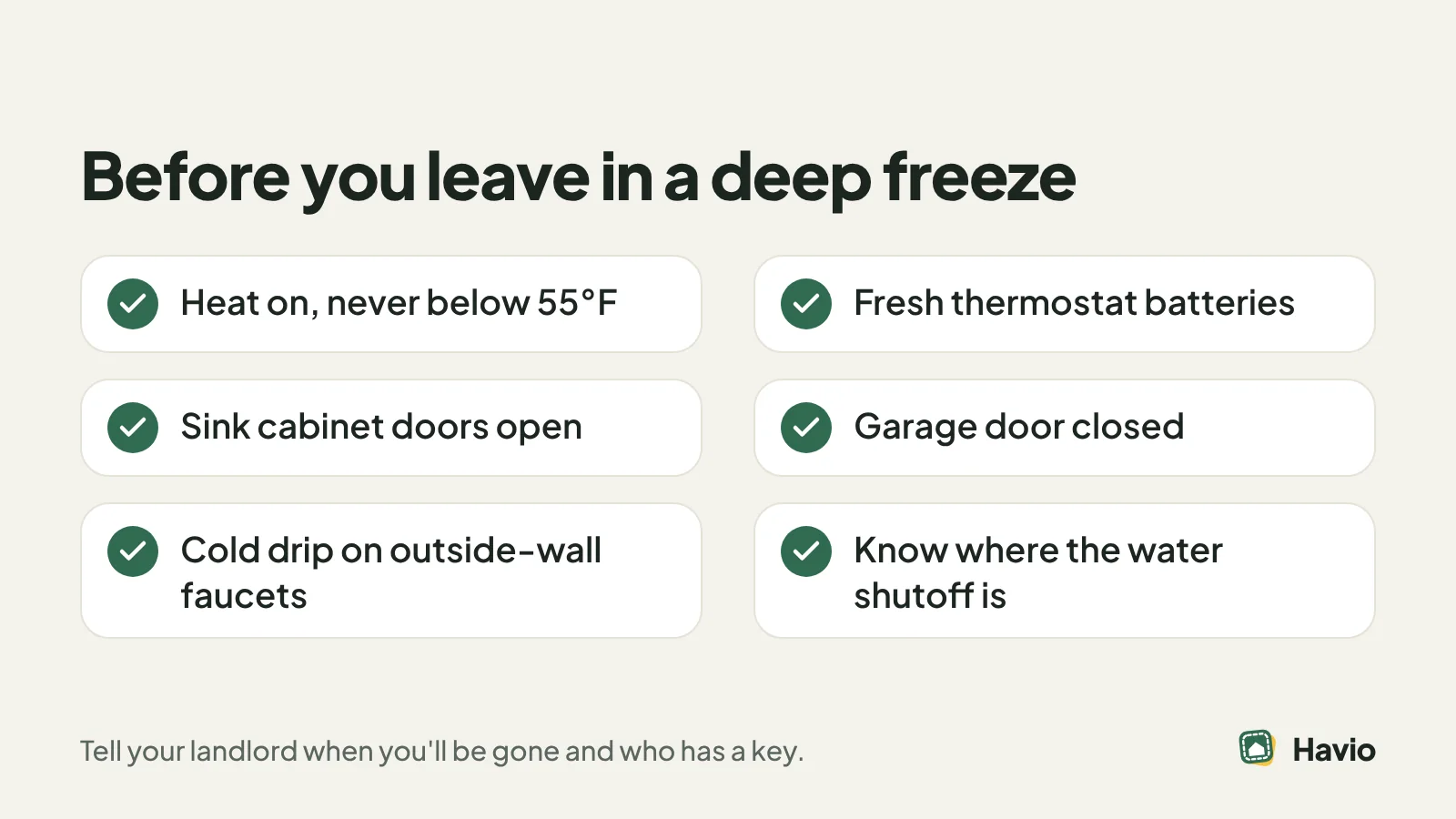
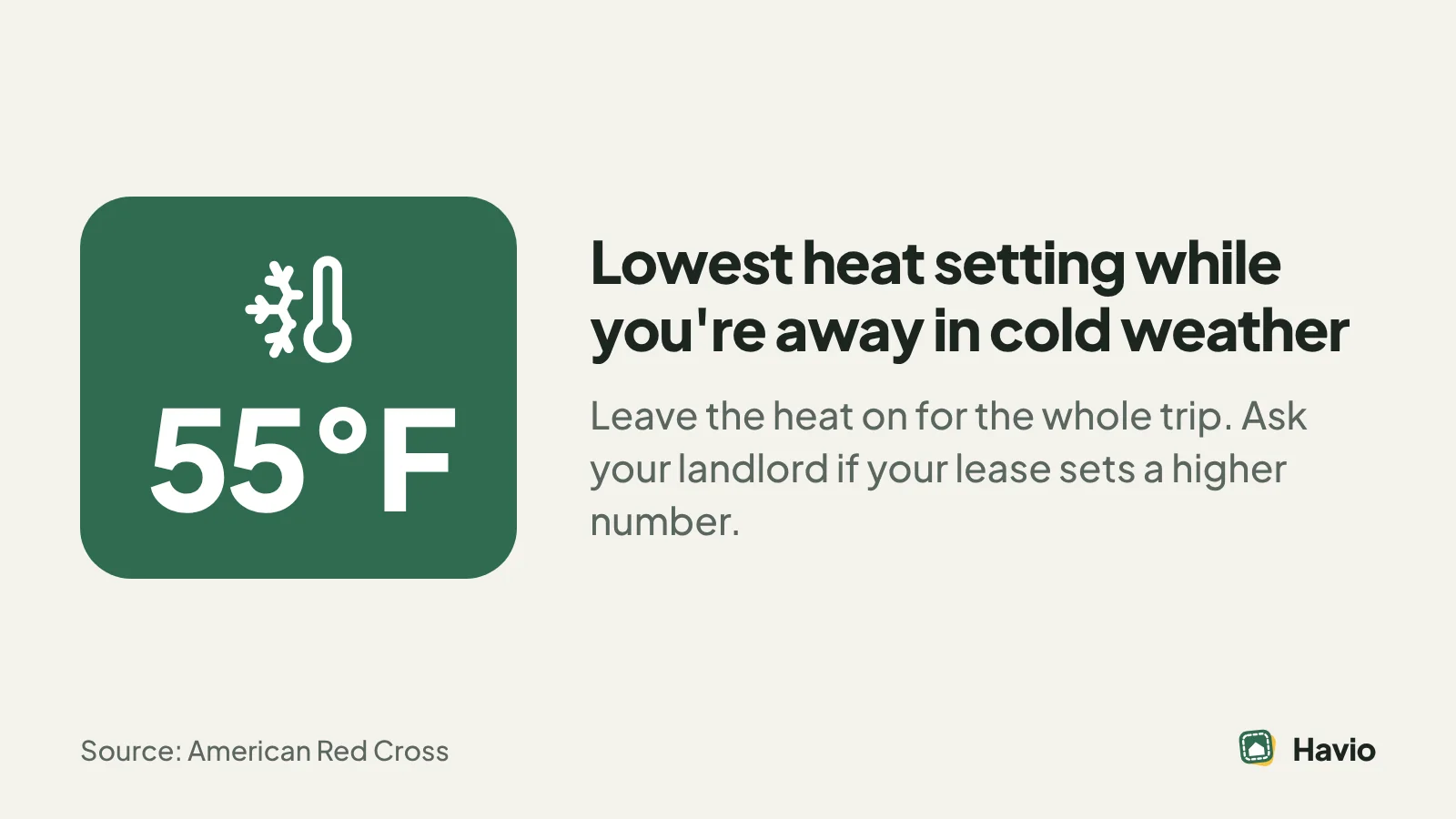
- Leave the heat on. Don't turn it off, even for a short trip. The Red Cross says to set it no lower than 55°F when you're away in cold weather. The Insurance Information Institute suggests 65°F or warmer, and says anything lower won't keep the inside of the walls from freezing. If you're not sure what your lease or your landlord expects, ask before you go.
- Check the thermostat batteries. If the screen is dim or blank, swap them. A dead thermostat can mean no heat at all.
- Open the cabinet doors under the kitchen and bathroom sinks so warm air reaches the pipes. Move cleaners up high if a pet or a kid will be in the unit.
- Close the garage door if water lines run through the garage.
- Let a faucet drip if it's going to be very cold and that faucet is fed by pipes on an outside wall. The Red Cross suggests a cold-water drip.
- Find the main water shutoff, so you or whoever checks on the place can turn it off fast. The Insurance Information Institute recommends knowing where it is and how it works.
If you pay your own heat, it's tempting to set the thermostat as low as it goes. A few extra degrees for a few days costs far less than a burst pipe, and the Red Cross makes the same point about not dropping the heat at night during a cold snap.
Tell your landlord, and ask someone to check in
A short message before you go helps everyone. Say when you'll be gone, whether the heat is on, and who has a key. If your landlord has a way into the unit, they'll know nobody will answer the door.
The Insurance Information Institute suggests asking a neighbor to check the house while you're away. In a rental, that might be a friend with your spare key or your landlord, if they're willing. Someone walking in once a day can catch a cold room or a wet ceiling before it turns into a flood.
Minnesota law also gives your landlord a way in during an emergency. The Attorney General's tenant handbook says a landlord can enter without notice when immediate entry is necessary to prevent injury to people or property.
If a pipe freezes anyway
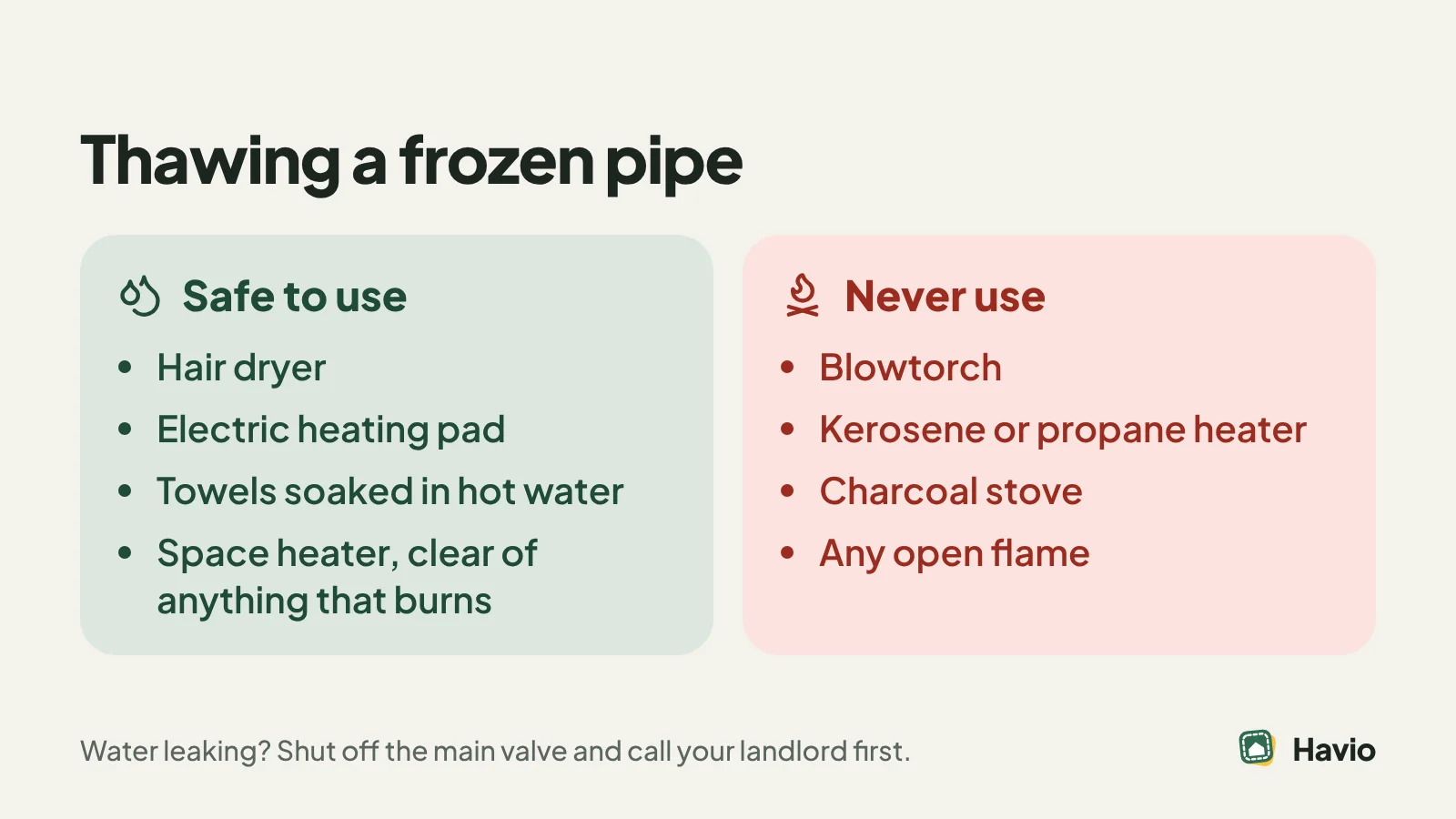
A faucet that only trickles when you turn it on is a sign a pipe is frozen. If you think a pipe has already burst, or you see water where it shouldn't be, shut off the main water valve first and call your landlord right away.
If the pipe is frozen but not leaking, tell your landlord before you try anything. They may want to send a plumber. If they say go ahead, the Red Cross lists the safe ways to warm a pipe.
- Keep the faucet open so water can run as the ice melts.
- Use an electric heating pad, a hair dryer, a space heater kept away from anything that can burn, or towels soaked in hot water.
- Never use a blowtorch, a kerosene or propane heater, a charcoal stove, or any open flame.
- Keep going until full water pressure comes back, then check the other faucets. One frozen pipe can mean others.
If you can't find the frozen spot or can't reach it, stop and let your landlord call a licensed plumber.
Who pays when a pipe bursts
In Minnesota, every lease includes the landlord's promise to keep the unit in reasonable repair. The exception is damage caused by the tenant's willful, malicious, or irresponsible conduct, or by someone under the tenant's control (Minn. Stat. 504B.161). The Attorney General's handbook also says tenants must pay for damage they cause. If there's a dispute about a burst pipe, HOME Line or a legal aid office can talk through your situation.
Your belongings are a separate question. The Insurance Information Institute notes that your landlord's policy won't replace your personal things, which is what renters insurance is for. If you have a policy, read how it handles water damage before you travel.
If your landlord uses Havio, you can send them a message in the app before you leave, and report a leak as an emergency with photos if something goes wrong while you're gone.
Sources
- Preventing and thawing frozen pipes, American Red Cross. Checked November 5, 2026.
- Surviving severe cold weather, Insurance Information Institute. Checked November 5, 2026.
- Renters insurance, Insurance Information Institute. Checked November 5, 2026.
- Minn. Stat. 504B.161, Covenants of lessor or licensor, Minnesota Office of the Revisor of Statutes. Checked November 5, 2026.
- Landlords and Tenants: Rights and Responsibilities (revised July 2025), Minnesota Attorney General's Office. Checked November 5, 2026.
General information, not legal or tax advice. Rules differ by state and city, so check yours or talk to a local professional before acting on it.